
What Is Emergency Roof Tarping? Here's How the Process Works
When a storm damages your roof, you may not be able to get a permanent repair completed immediately. That's where emergency roof tarping comes in. A roof tarp is a temporary protective covering installed over a damaged portion of your roof to help keep rain and moisture from entering your home until a permanent repair can be completed.
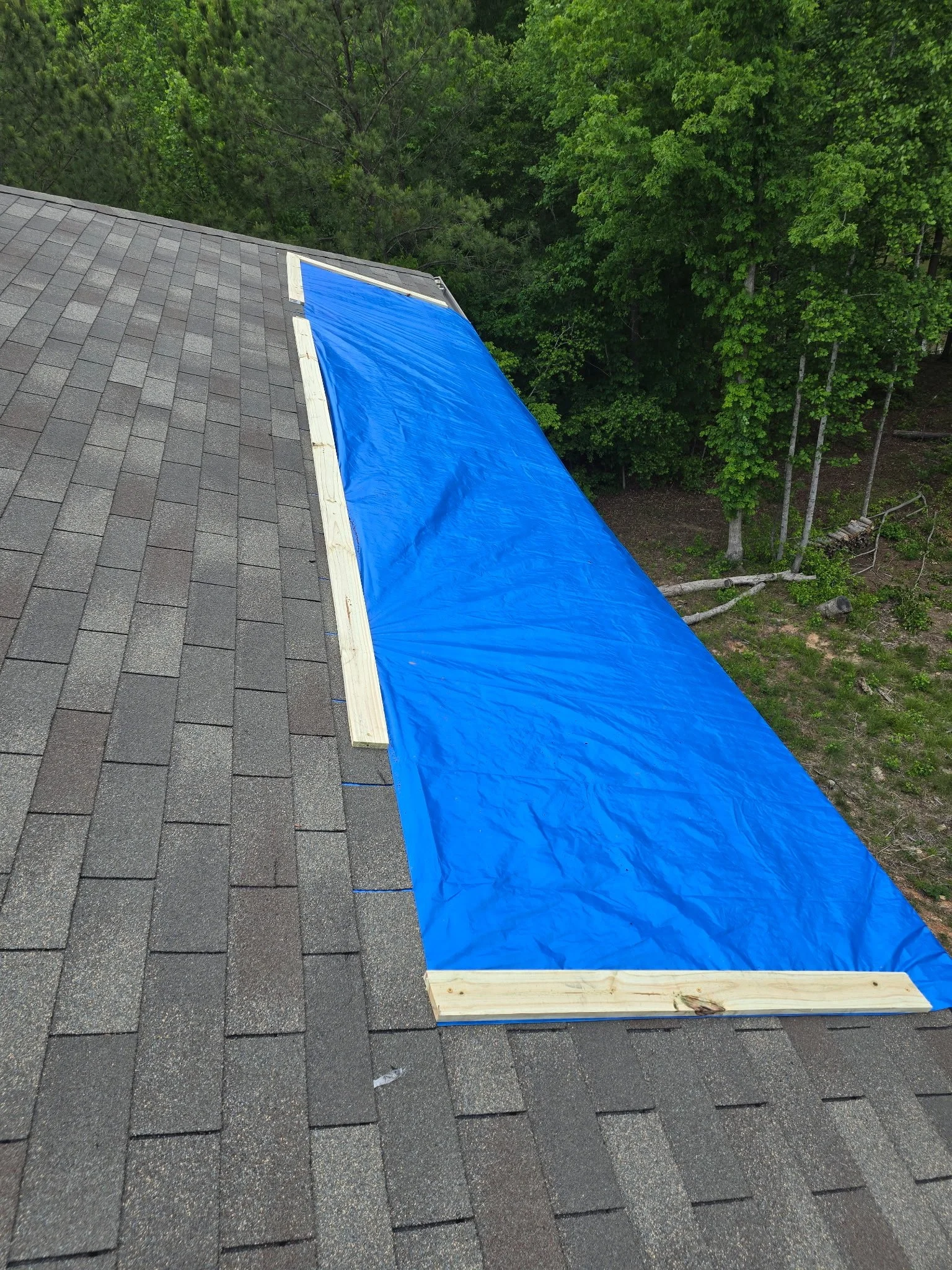
Why Would You Need Emergency Tarping?
Roof damage can happen unexpectedly. Strong winds, hail, fallen branches, and severe storms can damage shingles and expose areas of your roof to the elements. If rain gets through the damaged area, a relatively small roof problem can turn into interior water damage.
Emergency tarping provides a temporary barrier while you arrange for the appropriate permanent repair.
What Is the Emergency Tarping Process?
Step 1: Inspect the Damage
The first step is determining where the roof has been damaged. A professional will look for visible damage and potential entry points for water. The inspection may include the roof, attic, and affected areas inside the home.
Step 2: Determine the Tarp Coverage Area
The tarp needs to extend beyond the damaged area enough to help prevent water from getting underneath it. The size and placement depend on the location and extent of the damage.
Step 3: Secure the Tarp
The tarp must be properly secured so it can withstand weather conditions. The installation method depends on the roof and the circumstances surrounding the damage.
Step 4: Inspect the Interior
If water has already entered the home, it's important to look for signs of interior damage. This can include ceiling stains, wet insulation, or other signs of moisture intrusion.
Step 5: Plan the Permanent Repair
A tarp is only a temporary solution.Once your home is protected, the next step is determining whether the roof needs a repair, replacement, or another type of service.
How Long Can an Emergency Roof Tarp Last?
The lifespan of a tarp depends on the material, installation, weather conditions, and condition of the roof. A tarp should not be viewed as a permanent roofing system. Its purpose is to provide temporary protection while the underlying roof damage is addressed.
Can I Tarp My Roof Myself?
While it may look straightforward, getting onto a damaged roof can be extremely dangerous. Wet shingles, steep slopes, missing roofing materials, exposed decking, and unstable areas can all create fall hazards.
For significant roof damage, it's safer to have a qualified roofing professional handle the inspection and emergency protection.
Emergency Roof Tarping in Metro Atlanta
If your roof has been damaged and rain is coming, you don't want to wait until water is pouring through your ceiling. Summit Roofing provides emergency roof tarping throughout Metro Atlanta to help protect your home while you determine the appropriate permanent repair. We'll inspect the damage, explain what we find, and help you understand your options.
Don't Let Roof Damage Become Water Damage.
Contact Summit Roofing for emergency roof tarping and a roof inspection.